

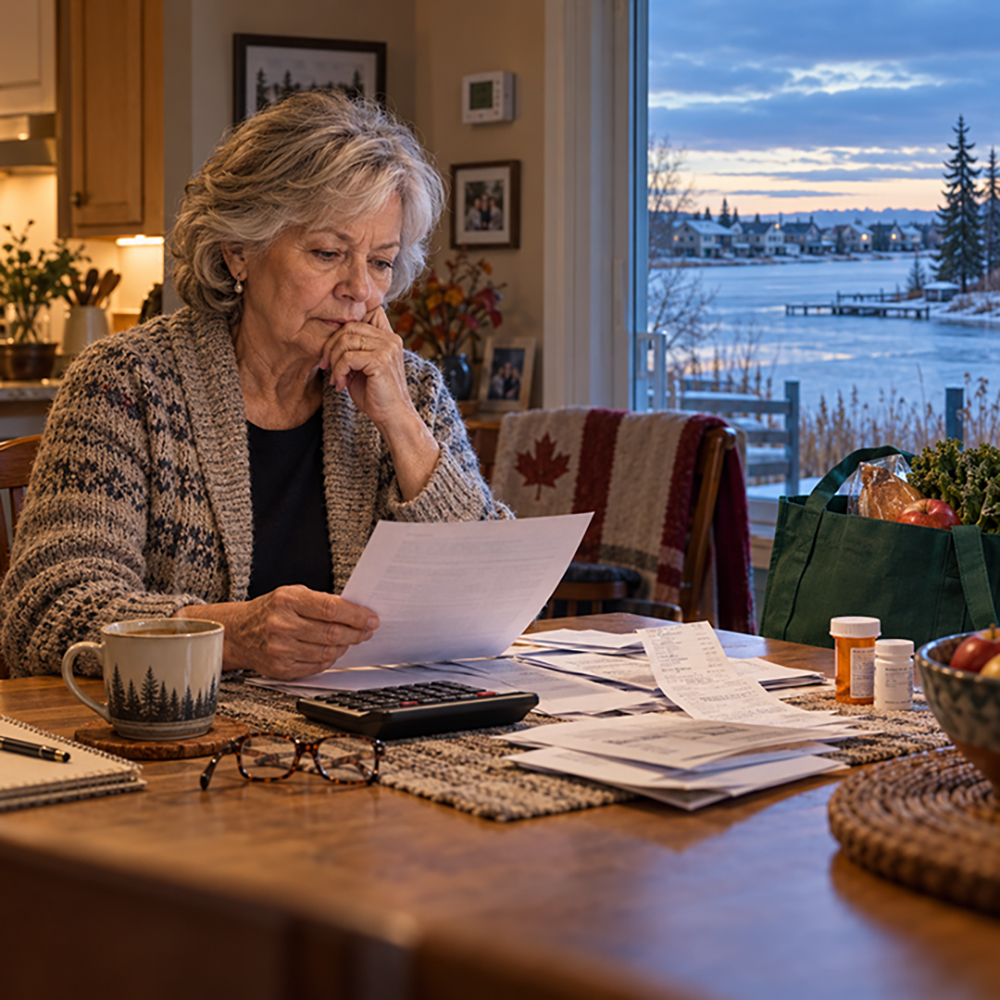
For many Chestermere seniors, retirement was supposed to be a period of security. The mortgage would be paid, the children grown, and a lifetime of work would provide enough income to live modestly and independently.
That promise is becoming increasingly difficult to keep.
Canada’s annual inflation rate reached three per cent in August, while Alberta’s inflation rate was 4.2 per cent in July. Gasoline, groceries, utilities, insurance and housing costs continue to place pressure on household budgets. Economists may debate whether inflation is rising, falling or merely “stabilizing,” but seniors living on fixed incomes experience the economy differently. For them, a higher price rarely disappears when the inflation rate declines. It simply stops increasing quite as quickly.
A senior cannot ask the Canada Pension Plan for overtime. Old Age Security does not offer a Christmas bonus. A modest retirement account cannot be endlessly stretched without eventually running dry.
That is the fundamental problem with living on a fixed income in an unpredictable economy: the income is fixed, but virtually nothing else is.
For a homeowner in Chestermere, remaining in the family home may seem like the affordable option. The mortgage may be gone, but the bills certainly are not. Property taxes, utilities, insurance, repairs and maintenance continue to arrive. A broken furnace, leaking roof or major appliance failure can consume months of disposable income.
Selling the house is not necessarily an easy answer. Smaller homes are not always substantially cheaper, particularly once condominium fees, moving expenses and real estate costs are considered. Rental housing can be expensive and uncertain. Retirement residences may offer safety, meals and companionship, but their monthly costs are beyond the reach of many people relying primarily on government pensions.
There is also an emotional price attached to leaving. A home is not simply an asset on a financial statement. It may be where children were raised, gardens planted, neighbours befriended and a spouse remembered. Telling an older person to “just downsize” ignores the human meaning of home.
Transportation adds another layer of difficulty. Chestermere is close to Calgary, but closeness on a map does not guarantee easy access. Medical specialists, hospitals and many services remain outside the community. Seniors who drive must contend with the costs of fuel, insurance, maintenance and registration. Those who stop driving may find their independence suddenly narrowed.
Food is another pressure point. Statistics Canada reported that grocery prices were 2.8 per cent higher nationally in August than one year earlier. That single-year increase follows several years of higher prices. A percentage printed in an economic report does not describe the experience of standing in a grocery aisle, putting an item back on the shelf or deciding that fresh fruit, meat or a familiar brand has become too expensive.
This is where financial hardship can quietly become a health problem.
Seniors may stretch prescriptions, postpone dental work, avoid replacing eyeglasses or buy cheaper food that does not meet their medical needs. They may keep the thermostat uncomfortably low, delay home repairs or stop attending social activities because transportation and registration cost money.
These decisions are often invisible. Older adults who have been self-reliant throughout their lives may be reluctant to say they are struggling. Pride, embarrassment and fear of losing independence can keep financial distress hidden until it becomes a crisis.
There are programs that can help. Eligible Canadians may receive the Guaranteed Income Supplement in addition to Old Age Security. Alberta offers income-based benefits, dental and optical assistance, Special Needs Assistance for Seniors and a program that allows qualifying homeowners to defer some or all of their municipal property taxes through a low-interest home-equity loan.
Chestermere’s municipal website directs residents to the provincial property-tax assistance program. The community also has an Older Adult Information Line at 587-349-7444, available Monday through Friday, and the Older Adults’ Coalition of Chestermere helps connect residents and caregivers with available resources. The city’s Gifts of Kindness Fund can provide short-term assistance with basic needs when financial circumstances suddenly change.
These supports matter, but a program is useful only if people know it exists, understand the rules and can complete the application. Government assistance is frequently spread across different departments, websites and forms. Seniors without reliable internet access, digital confidence or family assistance can easily miss benefits for which they qualify.
We should not confuse the existence of a program with the accessibility of that program.
Governments must simplify applications, coordinate benefits and make telephone and in-person assistance readily available. Eligibility thresholds should reflect the genuine cost of living, particularly in communities where housing and transportation costs are high. Benefits should be indexed quickly enough to respond to real price increases rather than forcing seniors to absorb months of financial erosion.
Municipal government also has a role. Every increase in taxes, utilities or service fees may appear reasonable when examined separately. The cumulative effect can be overwhelming. Council should include a seniors’ affordability assessment when considering major increases and ensure residents are clearly informed about payment plans and provincial deferral options.
The community itself has responsibilities as well. Local businesses can offer meaningful senior discounts without burying them in complicated conditions. Service clubs and community organizations can help with transportation, tax preparation, benefit applications, home maintenance and social connection. Families should have honest financial conversations before an emergency occurs.
Most importantly, we must stop treating senior poverty as a personal budgeting failure.
No amount of bargain hunting can compensate for an income that does not meet the cost of basic necessities. Seniors should be encouraged to budget carefully, compare insurance and utility plans, claim every available credit and ask for assistance early. But frugality cannot repair a retirement-income system that falls behind the real cost of aging.
Chestermere’s seniors helped build this community. They paid taxes, operated businesses, raised families, volunteered and supported neighbours. Many still contribute countless hours to local organizations.
They are not asking for luxury. They are asking to remain in their community, maintain their health, buy decent food and live without fearing the arrival of the next bill.
How do Chestermere seniors survive this tumultuous economy?
For now, too many survive by cutting back, drawing down savings and quietly doing without. They lean on family, neighbours and community organizations. They apply for programs when they can navigate them, and they hope the furnace keeps working for one more winter.
That may be survival, but it is not security—and it is not the retirement they earned.
Economic dignity in old age should not depend on luck. It should be a promise we keep.