

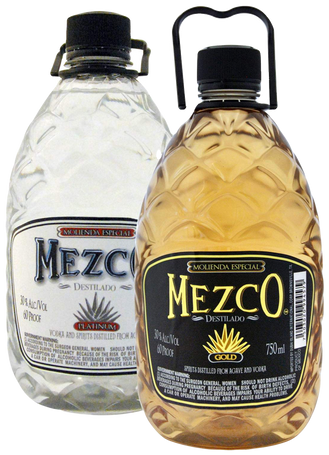
As our too-short Alberta summers turn to autumn, the first snowfall of the season cannot be far off, which gets me pining away for sunnier climes. With my travel budget already exhausted, I had to make do with listening to a Mariachi band at a local Mexican restaurant, where the Mezcal shots were flowing like water!
For those not familiar with this particular tipple, Mezcal is a distilled spirit made from agave, also known as maguey, a spiky succulent that looks rather like a cactus but is actually a different sort of plant altogether.
Mezcal is most famously associated with the Mexican state of Oaxaca, pronounced wah-HAH-kah for those of us who could use a little help ordering drinks south of the border. However, it can also be produced in other designated regions of Mexico.
Agave has a long and storied history in Mexico. Long before the arrival of European settlers, Indigenous peoples were making fermented agave beverages such as pulque. Distilled agave spirits developed later, although historians continue to debate precisely when and how distillation first arrived in the region.
The production of traditional Mezcal begins with harvesting mature agave plants, some of which can take well over a decade to reach maturity. The long, pointed leaves are chopped away to reveal the enormous heart of the plant, known as the piña because of its resemblance to a pineapple.
The piñas are then cooked to convert their complex carbohydrates into fermentable sugars. In many traditional distilleries, this means roasting them for several days in an earthen pit lined with hot stones and covered with agave fibres and soil.
This underground barbecue is responsible for the smoky character that many drinkers associate with Mezcal, although not every bottle tastes like a campfire.
Once cooked, the agave is crushed to release its sweet juices, fermented with yeast and distilled into the finished spirit. Some artisanal producers still use stone wheels pulled by horses or donkeys to crush the cooked agave, followed by small copper or clay stills for distillation.
This is a labour-intensive process, which goes a long way toward explaining why a good bottle of Mezcal can cost considerably more than your average bottle of tequila.
Speaking of tequila, the two spirits are close relatives, but they are not quite the same thing. Tequila must be made from blue Weber agave, while Mezcal can be produced from numerous agave varieties, each contributing its own distinctive flavours.
The most commonly encountered variety is Espadín, which generally produces an approachable Mezcal with earthy, herbal and lightly smoky notes. More unusual agaves can deliver everything from citrus and tropical fruit to pepper, flowers and freshly cut grass.
There is also plenty of variation in how the finished spirit is presented. Joven, or blanco, Mezcal is bottled without barrel aging, preserving the distinctive character of the agave. Despite what some first-time drinkers might expect, an unaged Mezcal is not necessarily a harsh or inexpensive spirit. Some of the finest examples are crystal-clear and intended to be sipped slowly.
Reposado spends between two and twelve months in wooden barrels, while añejo is aged for more than a year. Oak can contribute vanilla, spice and caramel flavours, but aging is a matter of personal taste rather than a guarantee of superior quality.
And what about that infamous worm lurking at the bottom of certain Mezcal bottles? In the misbegotten days of my squandered youth, my first experience with the worm in the bottle was at a Mexican beach bar near Cancun back in the previous century, and let’s just say the night did not end well, although that may have been due to youthful exuberance moreso than any quality issues with the Mezcal.
While this may be shocking to novice tipplers, the so-called worm is actually an agave-dwelling insect larva. While some producers incorporate it as a flavouring ingredient, its presence is certainly not a requirement for authentic Mezcal. Personally, I prefer my spirits without anything resembling a fishing lure floating around inside the bottle.
Another persistent misconception is that Mezcal contains the hallucinogen mescaline, presumably because the two names sound suspiciously similar. Mescaline is associated with certain cacti, including peyote, and has nothing to do with the production of ordinary Mezcal. Should you start seeing purple unicorns after an evening of enthusiastic sampling, you may wish to reconsider the quantity consumed rather than blaming the agave.
For novice tipplers, I suggest starting with an Espadín Joven, widely available at Alberta retailers. Pour a modest measure into a small glass, take a gentle sniff, and sip slowly to appreciate the interplay of smoke, fruit and earthy agave flavours.
If straight spirits are not your thing, Mezcal also makes a fine cocktail. Substitute it for tequila in a Margarita, or add a small measure to a Paloma for a smoky twist on the familiar grapefruit refresher.
A wide selection of Mezcal bottles can be found in the aisles of your friendly neighbourhood bottle shop, so with the chilly autumn evenings just around the corner, remind yourself of sunnier climes by picking up a bottle that will transport you to a Mexican beach!
Just remember to sip it slowly. Those agave plants spent years growing up, and it would be a shame to finish their life's work in a single shot