


As the mornings remain darker a little longer and the lingering soft light of November afternoons give warmth to the earth, the number of birds diminishes. The energetic green hues of summer leaves are gone. Naked trees sleep in anticipation of next spring’s growth. Stubble-filled fields, dried shrubs and lingering leaves glisten in the sunlight, revealing their subtle hues ranging from gold to a rusty brown. The recent snowfall has quickly concealed food sources for birds and with water turned into ice, the world for birds, and which birds can survive winter are limited.
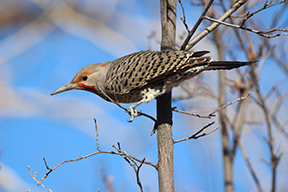
Standing by the entrance to Wyndham-Carseland Provincial Park, we look and listen for signs of avian life. In a moment or two, the cheery call of chickadees springs from the fence line. The screech of two blue jays emanating from Penny’s yard, adjacent to the park entrance, inform us of their presence. A softer call, that of the American Tree Sparrow, catches our attention. A nasally sound adds to the music of the treed areas. Both Red-breasted and White-breasted Nuthatches, each unique in their call, are curious, no doubt hearing other bird species. A boisterous call from a Northern Flicker cuts trough the still air. Chickadees land on the fence posts or tips of shrubs and tree branches. Nuthatches seem to stick in either a sideways or upside down pose on aspen trees or a spruce branch, peering out where we are standing. One of the blue jays floats by, landing on an upper tree branch, watching and perhaps waiting to discover our intent. A Downy Woodpecker has made a low-level landing, clutching onto a skinny aspen tree, likely curious as well. Our winter “regulars” are here for the most part.
These hardy birds have some natural advantages to endure nature’s coldest days. The work of plants in the summer months includes the production of seeds, a ready food supply for birds. Hidden within the crevices of cottonwood bark, under the scales of spruce bark or trapped in spider webs, insects and larvae provide sustenance. Each of these species also has the benefit of thick feathers to insulate themselves. In extreme situations, chickadees even huddle together during those coldest of winter nights.
The cackling laughter of a magpie helps us locate it, balancing on a long and leafless aspen branch. Not to be outdone, the throaty rasp of a raven moves our eyes skyward, as it drifts over the park and across the Bow River. Other winter birds have not made an appearance this day. House finches, Common Red Polls and Bohemian Waxwings will, during the coming months make an appearance.
The waning afternoon sunlight shares its warmth. Winds soften and the flutter of dried leaves quiets. River waters, gurgle and dance over the oft hidden stones and boulders of the river bottom. A lingering Belted Kingfisher, startled by our steps, is quickly airborne, coming to rest on a horizontal overhanging dead fall perch on the north side of the river. We walk along a well worn river trail, knowing that those birds that remain will keep us company in the coming days and months. Welcome, winter!