

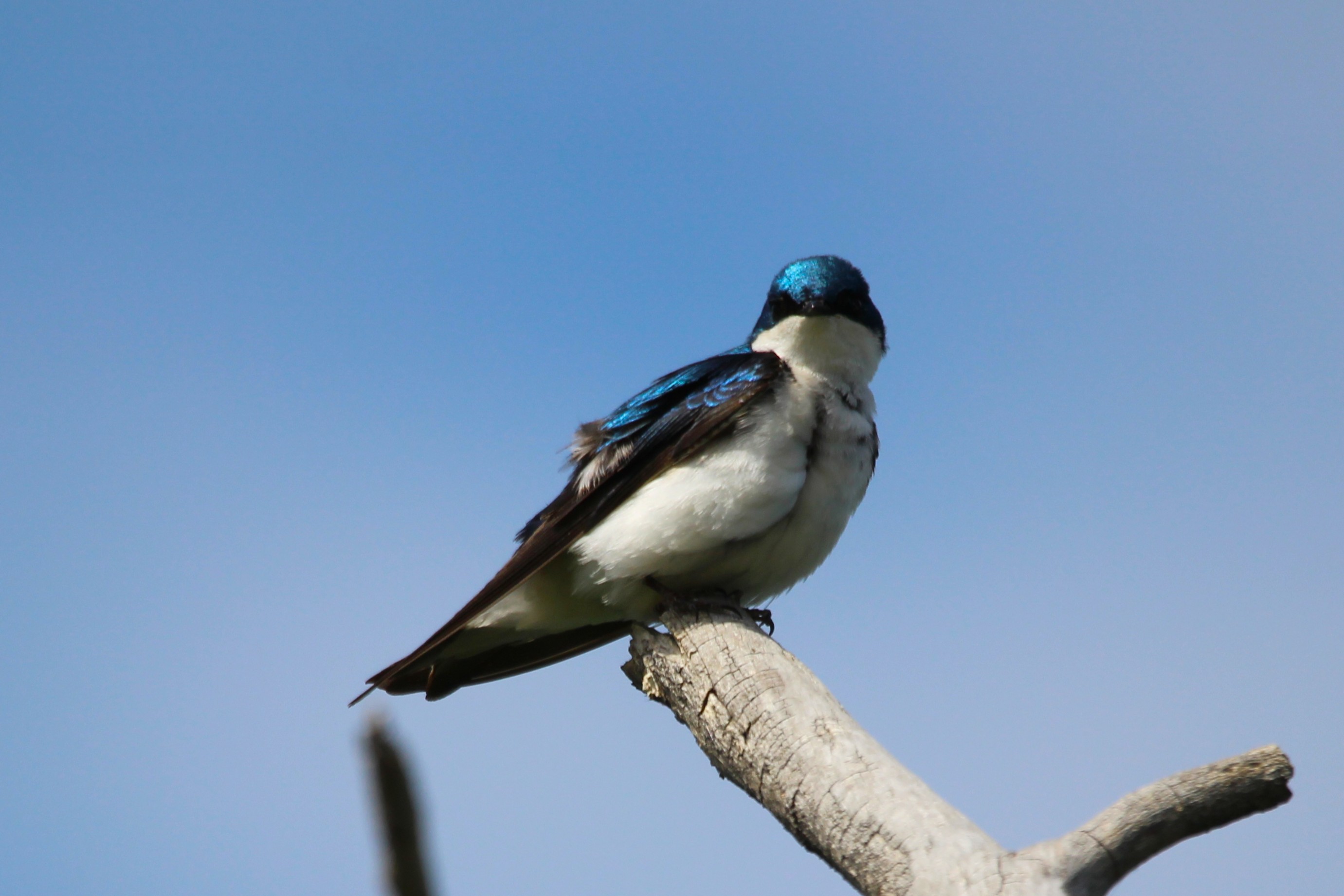
As the days of a cool spring rolled by, thousands of birds, many insectivores, are headed northward, seeking places to nest and reproduce the new generation of their species. The hearts of bird watchers soar like hawks as the brilliantly colored birds stop temporarily to rest and increase energy stores for their final push to their summer homes.
On a quiet Friday evening of the May long weekend, we were parked along Inverlake Road, watching the multiple species of birds forage in the ooze. Here and there, clouds of diptera, or hatched midge species, hovered above the slough edges. The odd bee moved slowly along the road edges looking for dandelions. No dragonflies or damselflies were flitting about. The insect world seemed silent save the millimetre long midges. I've often reflected on the lack of insects calling our car's front grill, headlights, windshield and backs of mirrors “home” after trips near and far. Thinking back to my outdoor years fishing and camping, insects were plenty. There never seemed to be enough Repex (repellent) to keep the bugs at bay.
Sixty years later, I cherish watching a few butterfly species randomly dance from flower to flower or landing on clover. It's a pleasure to watch various wasp and bee species pollinate dandelions and wildflowers, patiently flitting from pistil to pistil. I recall the synchronized dance of thousands of blue damselflies hovering above East Dollar Lake near Valleyview. Stops at gas stations between Grande Prairie and Calgary decades ago, were necessary not only for fuel, but to clear the front of our van of the recently ended lives of so many insects.
I believe that the very foundation of human life rests within the insect population. Our pollinators, the butterflies, bees, wasps, moths, flies and beetles help ensure that our crops, flowers, fruits and some vegetables mature and enter our food system. Bees are at highest risk of extinction with nearly 35% at extreme risk. To be specific, 10 percent of Canada's 759 pollinators are at risk of extinction. Nearly 23 per cent of pollinators in the United States are experiencing the same fate. To complicate things, some pollinators pollinate just a handful of plants. In dollars, pollinators provide more than $15 billion worth of food annually in North America
The most comprehensive study of 1600 pollinators, released in March of 2025, and published in the, found that 1 in 5 pollinators are at extinction risk. Key causes and threats of the insect decline include climate change, agricultural intensification through single crop production, pesticide use, changes to hydro logical and fire regimes, increasing urban development, pollution, including light pollution, and water loss through drought.
Generally insects are often viewed as pests with some having great notoriety, like spiders, ticks and wasps. Cans of pesticides are at the ready, available in stores to assist us in terminating lives of these invaders. Perhaps as a species, we've painted all insects with one brush, not realizing the complex relationship and life support these minute members of the world provide for so many other living things.
Is life held up by the wings and legs of those we may not think about?