
Chestermere residents are being asked to help determine what their public library should look like—not just next year, but for the next generation.
The Chestermere Public Library has launched a community survey seeking feedback on its programs, services and facility. The results will help inform a Facility Business Plan intended to guide the library’s development over the next 25 years and beyond.
The survey takes approximately 10 minutes to complete and remains open until September 15.
Residents are being encouraged to participate whether they use the library regularly, visit only occasionally or have not walked through its doors for some time. Responses are confidential, with the results to be reported in summary form.
The current consultation builds on a community survey circulated by the library earlier this year. People who responded during the spring are welcome to participate again.
The questions arrive at an important point for both the library and the city.
Chestermere has grown rapidly, adding new neighbourhoods and residents with different ages, backgrounds, languages and expectations. A library serving a smaller community primarily as a place to borrow books may be asked to perform a much broader role in a city experiencing that kind of change.
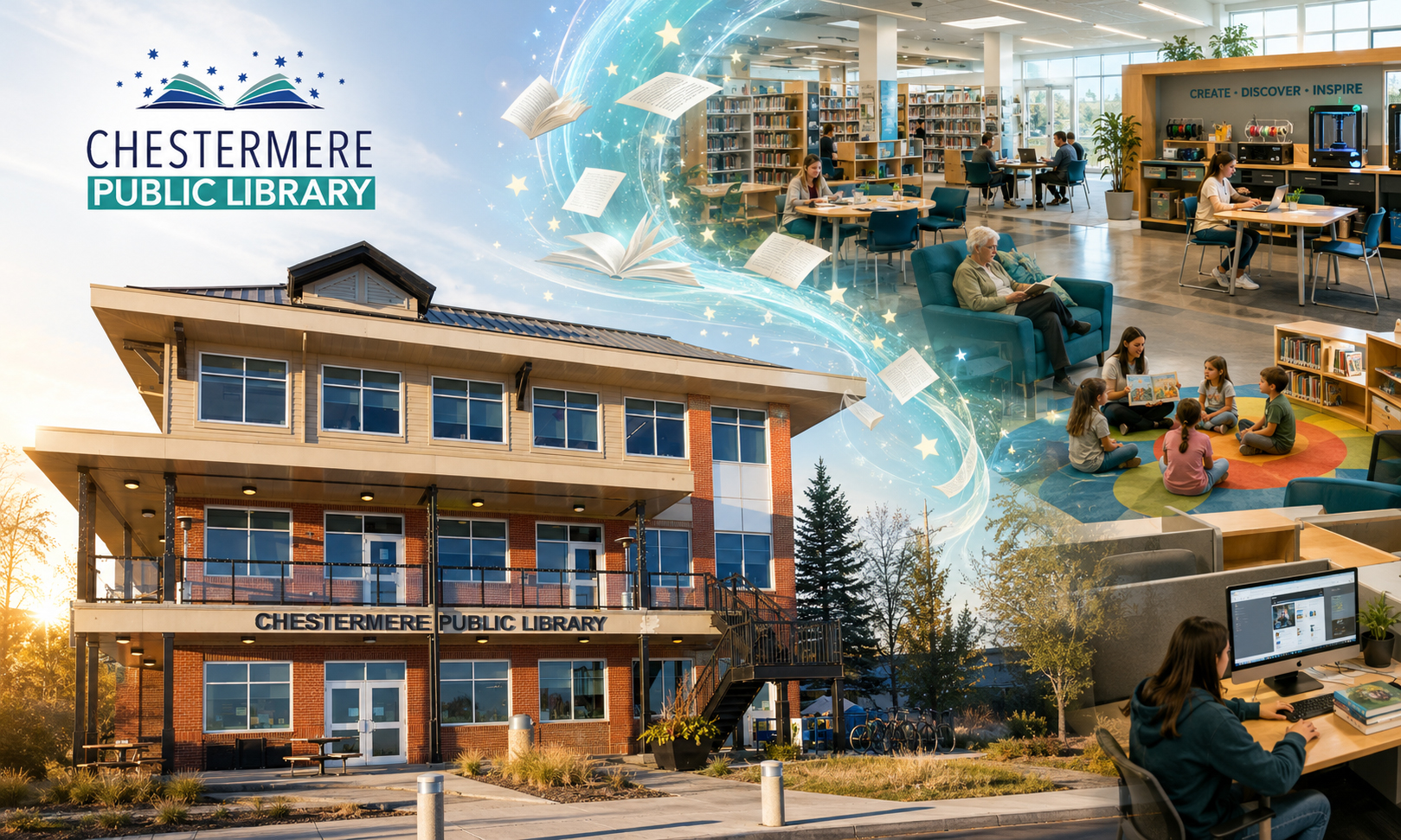
Modern public libraries provide access to books and literacy resources, but many have also become gathering places, technology centres, study spaces and sources of educational and cultural programming.
They can offer children their first introduction to reading, give students a place to study, help newcomers find information, connect residents with digital resources and provide seniors with opportunities to remain socially active.
For people without reliable internet access, a library can provide computers and connectivity. For residents facing financial pressure, it offers books, media, educational resources and activities without requiring another paid subscription.
Libraries are also among the few indoor public spaces where people can spend time without being expected to purchase something.
Those roles make the survey about more than selecting preferred programs. The responses could influence decisions about the library’s physical space, how it serves different parts of the community and which services should receive priority as Chestermere’s population continues to increase.
Residents may want to consider several questions before responding.
Does the existing library provide enough room for children’s programming, quiet study, community meetings and technology? Are its operating hours convenient for working families and students? Are programs reaching seniors, teenagers, newcomers and residents from different cultural backgrounds?
People may also have ideas about expanded digital collections, makerspaces, recording or creative facilities, homework support, language programs, employment resources, local-history preservation or partnerships with schools and community organizations.
Not every suggestion can be implemented immediately, and the Facility Business Plan will have to account for funding, staffing and available space. However, long-term planning is more useful when it reflects the people who will rely on the service.
That includes residents who currently do not use the library.
Someone may stay away because the hours are inconvenient, the building does not offer the space they need, they are unaware of available services or current programming does not reflect their interests. Hearing from non-users can help identify gaps that attendance figures alone may not reveal.
The survey also gives residents a chance to think about what Chestermere will need as it becomes a larger and increasingly diverse city.
Children using the library today may be returning with their own families within the 25-year period covered by the plan. Decisions made now could therefore influence literacy, learning and community connection well into the 2050s.
A successful public library is not defined only by the number of books on its shelves. It is defined by whether residents can see a place for themselves inside it.
The survey closes September 15 and can be accessed through the City of Chestermere website or the Chestermere Public Library website.