

Now and then our outdoor adventures hold an unexpected connection with one of Alberta's furry creatures. A recent trip on an early Saturday morning to the McMullen Island Day Use area nestled along the Red Deer River in Drumheller was no exception. Having not been there since early June, we were eager to spot bird species both unique and common to the area. The day use area has great parking, washrooms, well serviced paved pathways that meander back into Drumheller, all edged with thickets of energetic willows and tall aspen stands.
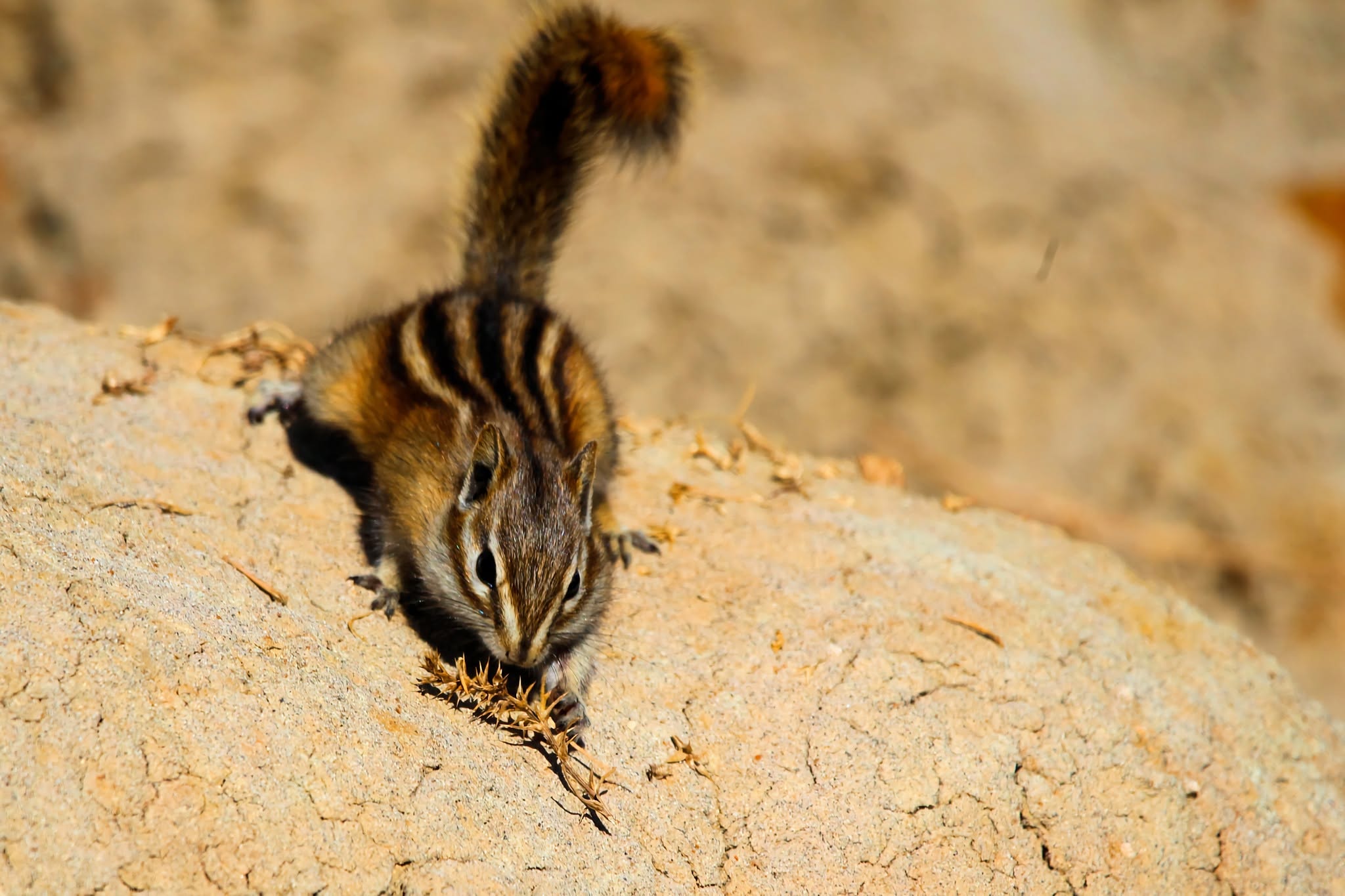
Within seconds of walking over to a picnic bench, where one gets a nearly panoramic view of the badland cliffs hugging the community of Nacmine, the first of five long tailed surprises made its appearance. Delighted would not be descriptive enough for both of us. One of the three species of chipmunks native to Alberta appeared curious about our early morning presence and made itself comfortable on a nearby stump. Although the least chipmunk weighs in at about 2 ounces or 56 grams, size is no impediment to the intensity and velocity of movement. This first chipmunk seemed to know that we carbon-based units may carry snacks for little furry creatures from time to time. However this little one already had an unshelled peanut to enjoy.
As we strolled down the trail into the heart of the park, heading alongside and downstream with the Red Deer River at our right, it became apparent our early morning park greeter had many associates who were also active. The wooded area of the park hugging the river bank, complete with berry bushes, wildflowers, as well as lots of places in which to hide, made an ideal habitat. A pair of chipmunks were also scurrying between the clay formations, cacti and eroded gullies, expressing an exuberance for life to be envied. Another chipmunk would give Donovan Bailey a serious challenge for fastest mammal, as it rocketed down and across the paved trail, hoping to hide from our presence. It's hard not to giggle when the long tail is perpendicular, much like a hair covered antenna, and appears to magically fly when the chipmunk is on the move.
Chipmunks are most active during the day, foraging for seeds, berries, nuts and fruit if available as well as insects to complete the menu. Once an area is depleted of food, least chipmunks will mark these areas with urine, identifying the area as a place to avoid for foraging. Least chipmunks will make a determined effort to hoard as much food as possible in preparation for winter. In place of hibernation, these diminutive chipmunks go through long stages of sleep or torpor, waking up to raid the fridge in the burrow, then returning back to sleep over the winter months.
With the vegetation and midsummer colors of wildflowers in full bloom, a variety of birds perched in shrubs or on tree branches, chipmunks add to the joy of being outdoors on birding trips. Petite? Oui. However, this little mammal on the run, has a big place in our hearts.