


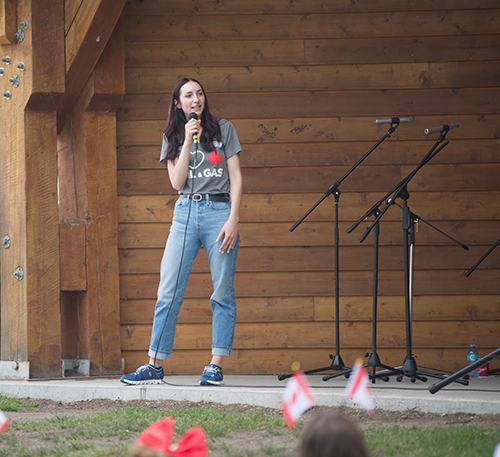
Chestermere-Strathmore MLA Chantelle de Jonge will be back on the ballot for the United Conservative Party in the next provincial election.
The UCP announced that de Jonge has been acclaimed as the party’s candidate for Chestermere-Strathmore, giving her a clear path to seek a second term as the riding’s MLA. She was first elected to the Legislative Assembly of Alberta on May 29, 2023, and was appointed Parliamentary Secretary for Affordability and Utilities later that summer.
For Chestermere voters, the announcement means the next campaign will not begin with a contested UCP nomination race in the riding. Instead, de Jonge enters the pre-election period as the sitting MLA, with both local constituency work and a growing list of provincial responsibilities attached to her name.
Since being elected, de Jonge has served in a role tied closely to some of the issues residents raise around kitchen tables: power bills, affordability, utilities, and the cost of running a household. Alberta.ca lists her as Parliamentary Secretary for Affordability and Utilities, a position she has held since July 13, 2023.
Her provincial role has also grown beyond that file. Alberta’s current government committee list shows de Jonge serving on Treasury Board, the cabinet committee responsible for reviewing government spending and fiscal decisions. That puts the local MLA at one of the tables where Alberta’s budget choices are tested before they become line items affecting municipalities, families, schools, health care, roads, grants, and provincial programs.
de Jonge has also been involved in Alberta’s discussion around nuclear energy, including the potential future use of small modular reactors. She chairs Alberta’s Nuclear Energy Engagement and Advisory Panel, which was asked to advise the province on what role government may have in advancing nuclear energy. The panel’s final report was publicly released in April 2026 and included recommendations built around public awareness, economic and community impacts, safety, waste management, environment and water, public participation, and market readiness.
That work matters locally because Chestermere sits in a fast-growing region where power demand, housing growth, industrial development and long-term infrastructure needs are no longer abstract provincial debates. Decisions made in Edmonton eventually land on the edge of Chestermere Lake, in monthly bills, municipal planning, and the services residents expect to keep up with growth.
At home, de Jonge has been connected to several community files and announcements in Chestermere and the surrounding riding. In February, the Chestermere Historical Foundation received $42,643 through Alberta’s Community Initiatives Program for the final phase of its “Word of Mouth” public art project, including a community time capsule. The funding was announced by de Jonge.
In April, a Chestermere restorative justice group received a $25,000 provincial grant, another local announcement tied to community safety and prevention work. She has also used regular public updates to highlight provincial affordability programs, sport and recreation funding, and government priorities that could affect families in Chestermere and across the riding.
The next campaign will also unfold in a province wrestling with larger political questions, including Alberta’s relationship with Ottawa and public debate around separatism. de Jonge’s own public position on Alberta separation is less clear. The Anchor was able to verify that she voted with the government on third reading of Bill 14, the Justice Statutes Amendment Act, 2025, which passed in December. The official Votes and Proceedings list de Jonge among MLAs voting in favour.
Bill 14 made changes to several provincial election and referendum laws, including the Citizen Initiative Act and Referendum Act. Elections Alberta said the amendments came into force after royal assent on Dec. 11, 2025. Critics of the bill have argued it made it easier for citizen-led referendum questions related to Alberta independence to proceed, while the government framed the legislation more broadly as changes to democratic processes and access to justice.
For now, de Jonge’s acclamation sets the table for the next election in Chestermere-Strathmore. The campaign will decide whether voters want to return a first-term MLA who has moved into broader provincial responsibilities, or whether they want a different voice carrying local concerns into the Legislature.
Either way, Chestermere will have questions. About growth. About affordability. About schools, roads, health care, policing, recreation and the future of Alberta itself.
That is where the next campaign will have to move from party announcement to local accountability.