
Living in Mexico has given James, a Canadian expatriate, a different perspective on two celebrations that share imagery of spirits and the departed. Through neighbourhood festivities and local traditions, he has noticed a distinction between Halloween’s playful encounters with the spirit world and Día de los Muertos’ welcoming remembrance of loved ones. In this personal account, he shares those observations—and the sense of community and generosity he finds in both.
The evening before “All Saints Day” or 01 November is the time that the thin veil between the secular earth and the spirit world is extremely thin. This is the time when spirits can briefly cross over. The practice of dressing up in disguise to fool spirits looking for you for harm and offering the bribe of a treat has evolved over the centuries to modern day.
In Mexico, the tradition of trick-or-treating is alive and well. In the photo I sent to your phone, a crowd of “spirits” has gathered for candy—our playful bribe to keep them moving along. The bar in the background is one where we are regulars, and together, the patrons and the bar supply the sweets. We started at 4:30 p.m. and finished at 8:00 p.m., handing out 250 kg (550 lb) of candy to more than 2,000 “spirits” of all ages.
At the marina, people of all ages join in. Businesses participate, but so do the “spirits” themselves. When trick-or-treaters spot a costume they enjoy, they sometimes reach into their own stash and offer a treat to the person wearing it—a kind of spirit-to-spirit respect. There is plenty of noise, but it is the good-natured sound of celebration. Rather than the old competition to collect the biggest haul, we saw people competing to have the most fun.
There were also “spirit bombs”—fireworks from the surrounding hotels. In the playful spirit of the evening, they offered another distraction to keep the spirits out of mischief.
All in all, it was a great street party.
Día de los Muertos
The Catrina as developed over the last 125 years from a political satire/ critique of working class Mexicans who rejected their indigenous roots and aspired the European aristocratic ideals. The satire was that the working class would have to pass on to obtain those ideals.
The Catrina, has evolved from the original satirical significance to a representation of Mexican culture. It no longer mocks class aspirations alone, but reflects Mexico’s interconnected relationship with death, identity and memory.
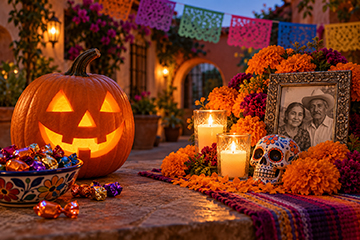
This celebration is the opposite of Halloween. This time the spirits are invited to mingle with family and are revered and welcome. The family and friends will pay homage to the departed ancestors and will sit up with them though out the night. Individual altars are designed to remember departed loved ones. The altars often include photos, mementos, and processions of the deceased. They often have flowers (usually marigolds from Aztec times) thought to guide the spirits to visit the living.
This is truly a celebration of family, life, and reverence of the past.
The celebrations in the Square are for those who have no family, as then everyone is family and enjoys the celebration.
Both events are very much worth attending and worth embracing as a culture. Both are the act of giving as a community and honouring our past families.