

Observant birders inherently revere the creation of the next generation of any bird species. From purple martin condos, to tree swallow boxes and robins building nests above outdoor lighting fixtures, May, June and July are truly busy months for adult birds and wildfowl.
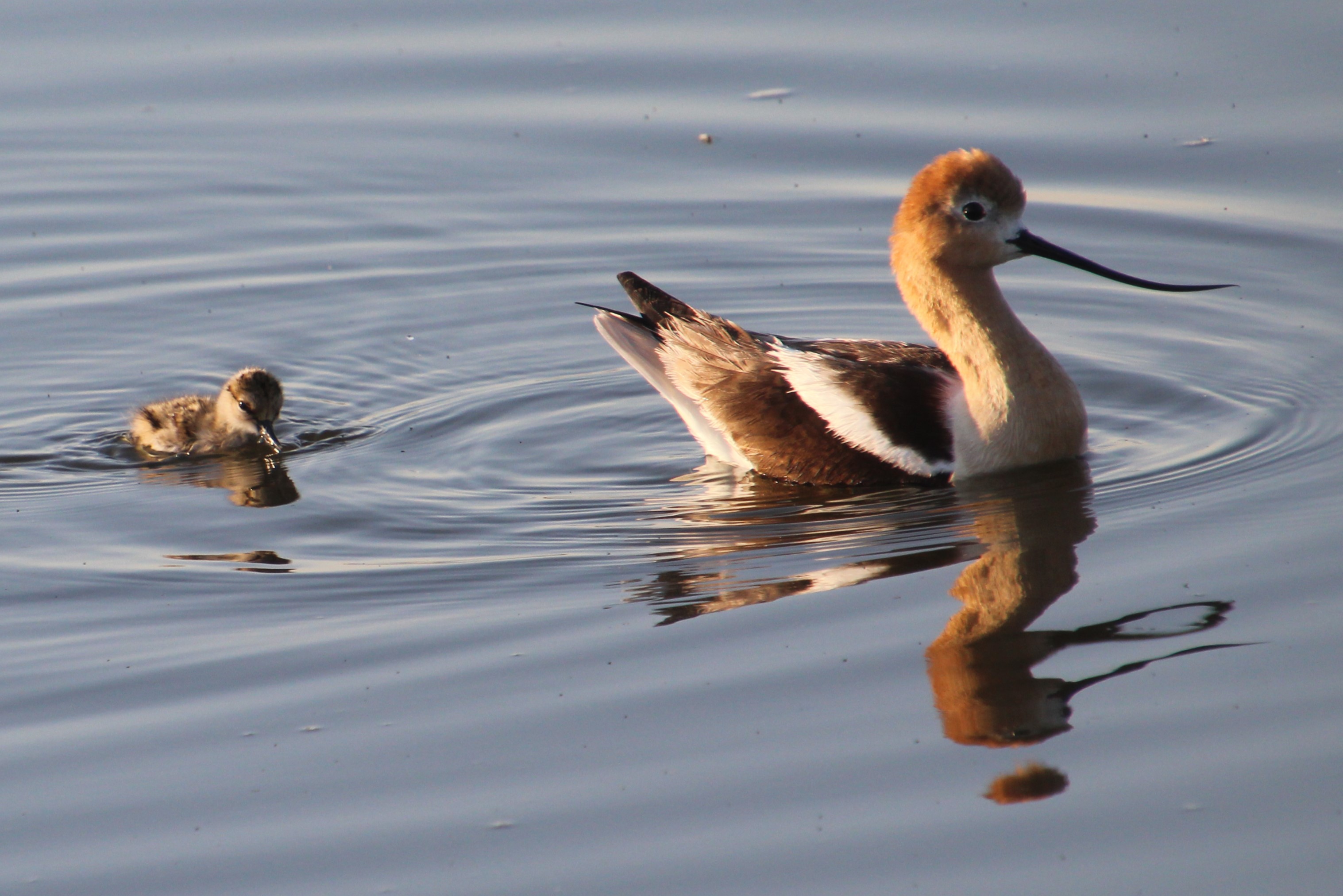
On a recent trip to West Inverlake Slough, located on Secondary Road 791, we were wondering what species might be living in this small waterbody. With the sun still rising behind us we looked along the western portion of the slough. A pair of adult American Avocets moved cautiously, watching our every move. It became apparent that the avocets had juveniles foraging in the tall grasses and shoreline of this tiny slough. To our surprise each of the youthful avocets were clearly different in size, indicating a notable difference in when the eggs were laid, incubated and hatched. Sunlight lit up the lightly colored feathers of the juveniles as they moved, very aware of our presence nearby.
While watching the young and clicking our camera shutters, we marveled at the close up view we had of the next generation of avocets. Avocet females lay on average, four eggs in the most scant of nest materials. She incubates the eggs during the night, while both parents share this duty during the day. After twenty-four days or thereabouts have passed, the cracks to freedom appear in the eggs. What we find amazing is that immediately after birth, the newborns, “dressed” in beautiful down, leave the nest and begin foraging for food. The parents of course, ensure the best safety practices they can are implemented to provide the greatest chance for the survival of their young. If an intruder gets too close to a nest or a juvenile avocet, the parent may intially use distraction to draw it away. The parent will crouch down, spread its wings and run away from the threatened young. If the intruder is too close, extraordinary action may be required. Adults will fly directly at the intruder, calling out loudly, alerting other avocets and trying to chase off the danger.
If successful in avoiding danger, an American Avocet has an average lifespan of five years. Decades ago, avocets would normally create the next generation in southeastern Alberta. With climate change and habitat loss as challenges, the breeding range has moved as far north as the Northwest Territories, We were happy to enjoy, watch and appreciate this most beatutiful of species, just minutes from home during the quiet early morning hours of a July weekday. Growing up local, these younthful avocets are truly a part of our birding experience