

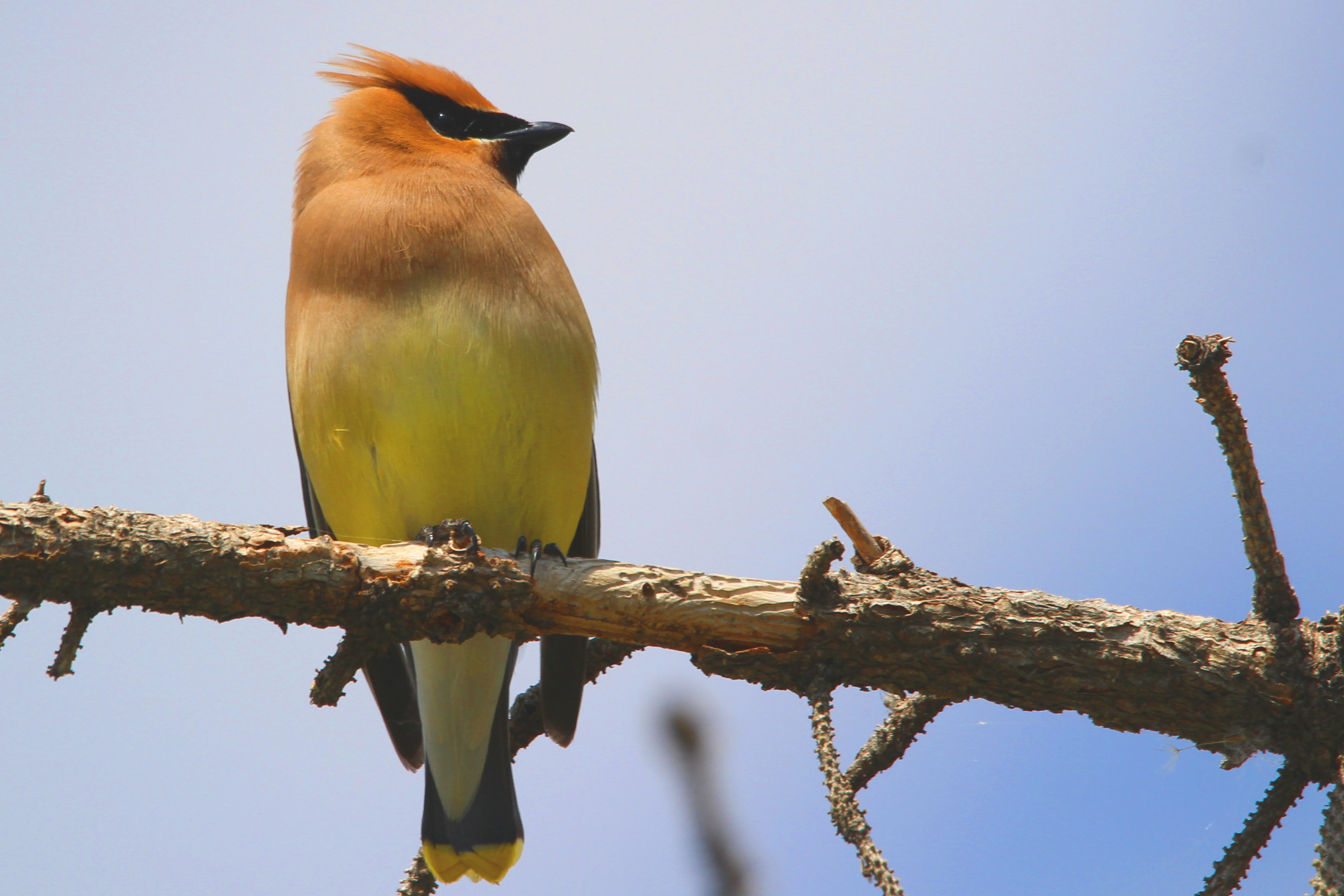
Although most Canadians are familiar with the term “climate change”, some of the more subtle changes in nature provide evidence where increases in temperature have birds acting in their best interests for their multi-generational survival. As drought, heat, agricultural practices and urbanization increase in the southern United States, Canada may temporarily “benefit” from these changes, from the bird watcher's perspective.
Fortunately, the Audubon Society, through the analysis of citizen science data collected on the popular global website, ebird.org, has painted a picture of both northward and upward migration, as well as other behavioral changes in birds. From 1966 to 2005, 60% of 305 bird species of North America have moved north. A few examples, include the Purple Finch moving no less than 433 miles, the House Finch, 269 miles, and Ring-billed gulls moving nearly 356 miles. In addition to moving north, some species seeking cooler climates have moved into the foothills and mountain ranges to find that comfortable temperature.
Research completed by Nature Canada identified some concerning outcomes. Birds are laying eggs 6.6 days earlier per decade, while Tree Swallows are nesting up to 9 days earlier than 30 years ago. Birds are migrating earlier. In analyzing 63 years of data for 96 Canadian migrating species, 27 have significantly altered migration times, arriving earlier with warmer springs. 6 bird species are delaying the departure south. In Europe, some birds have “retired” from migrating all together.
Mr. Jeremy Cohen, a Yale research scientist, published an extensive study in the May 28th, 2025 edition of Nature Ecology and Evolution, examining the relationship between bird migration and the warming climate. Using data collected over 20 years, researchers found that 400 North American bird species shifted their locations between the years 2000 and 2020, during both summer and winter.
On average, the 400 species were able to reduce their summer warming by 52% of what they would have experienced had they stayed put. During the winter, the average warming was reduced by just 11%. Interestingly, each species reduced their risk of warming temperatures in varying degrees. For example, Blue-winged warblers could easily move north, while Nashville warblers hardly moved. Cactus wrens didn't move much in winter and were faced with a warming of 5C during the “cold” season. Cohen concluded that birds which normally migrate long distances and have wing shape proportions meant for long-distance flight, were most successful in reducing exposure to climate change.
Popular with birders, the wood warblers of Canada, provide evidence of changing behavior. 7 of 35 North American warblers have shifted on average, 65 miles further north over the past 24 years. One would hope that this natural shifting north by birds will save them from climate change. However other factors put the birds at risk. Continued land development and agricultural land clearing could fragment suitable habitat for bird species. Furthermore, food and nesting materials that birds depend on, may not be available. Moving into new areas brings additional risks of parasites, competitors and predators to which they are not adapted.
Canadian bird watchers will without doubt, see more species. One example is the beautiful White-faced Ibis, first identified near Rosebud, Alberta in 1941. Its range historically has been at Pakowki Lake in southeastern Alberta and Frank Lake, east of High River. Sightings now have occurred near Cold Lake and Grande Prairie, several hundred kilometers north. Go north feathered friend. It may be good for a while.