

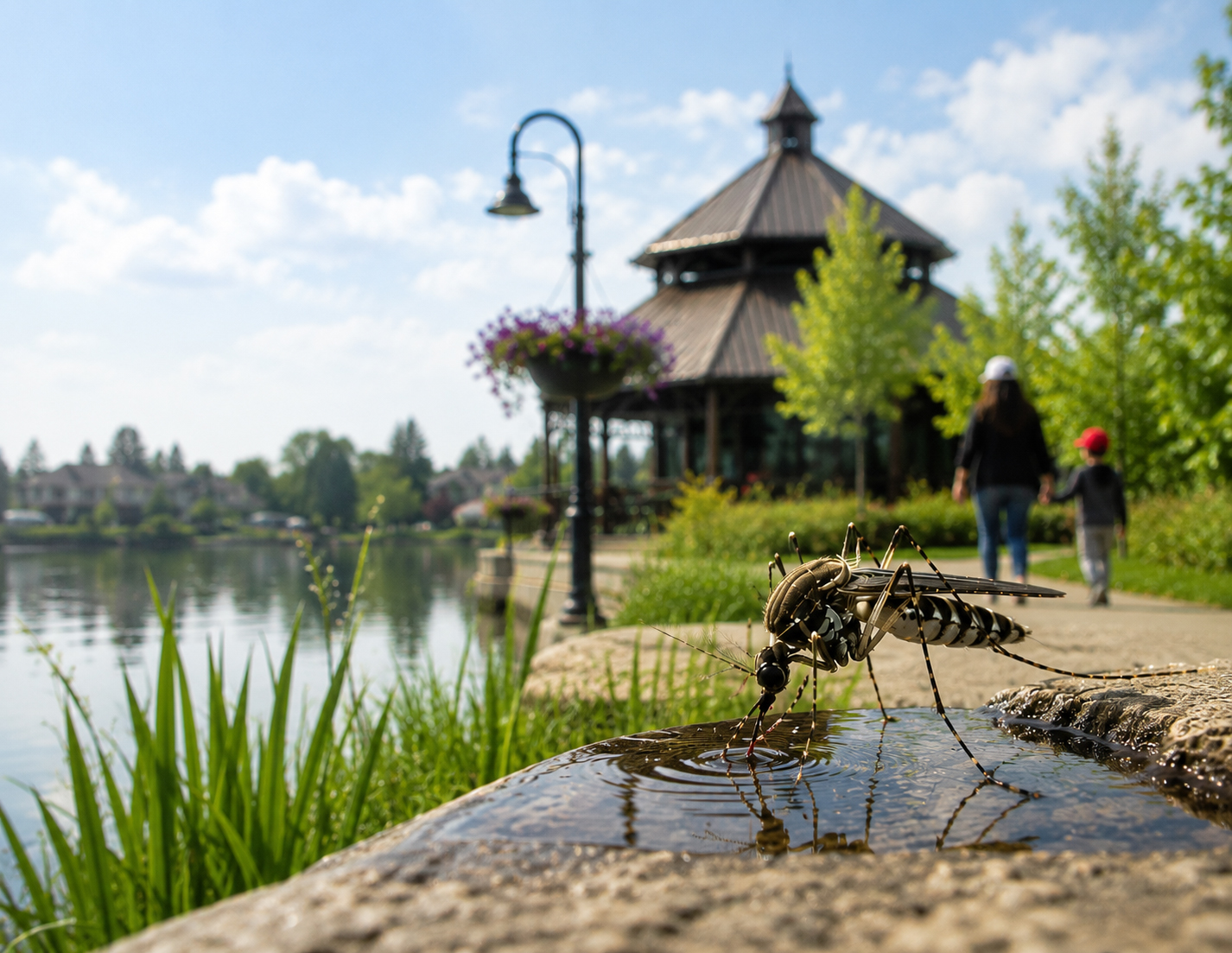
Chestermere’s mosquitoes have had a good run.
Too good.
After weeks of heavy rain left water sitting across the community, the City of Chestermere has launched a mosquito control program aimed at stopping the insects before they turn every evening on the deck into a small battle of wills.
The City released its treatment plan on Thursday, July 2, outlining what it described as a science-based approach focused on mosquito breeding areas. Instead of widespread spraying, crews will apply larvicide to standing water where mosquitoes develop before they become biting adults.
That distinction matters.
The City said the recent wet weather created breeding conditions in storm ponds, roadside ditches, parks and residential areas. Anywhere water sits for long enough, mosquitoes can get to work.
“After weeks of heavy rain, mosquitoes can develop anywhere standing water remains,” the City said.
For Chestermere residents, that means the problem is not only in large ponds or public drainage areas. It can also be in the quiet corners of a yard.
A bucket left under the eaves. A bird bath that has not been emptied. A planter holding rainwater. A kiddie pool, wheelbarrow or tarp with a shallow puddle tucked inside it.
Those small places can produce a surprising number of mosquitoes.
“Even a small amount of standing water can produce hundreds of mosquitoes,” the City said.
The City said larvicide is being used because it targets mosquitoes at the source. By treating standing water, crews can interrupt the mosquito life cycle before the insects mature and spread through the community. The City also said larvicide is safe for people, pets and wildlife when used as directed.
Monitoring and treatment will continue as needed.
Still, the City is not promising a mosquito-free summer. That would be a brave promise in a lake community after a wet June, and probably one best avoided.
Mosquitoes can also move into Chestermere from surrounding wetlands and agricultural areas, the City noted. Even with local treatment, conditions outside the community can continue to affect what residents experience inside the city.
That is why residents are being asked to do their part at home.
The job is simple, but useful. Walk the yard. Check anything that can hold water. Empty it, tip it, cover it or move it. The less standing water there is around homes, the fewer places mosquitoes have to breed.
It is the kind of summer chore that does not take much time, but can make the difference between enjoying an evening outside and surrendering early to the indoors.
The City said mosquito populations typically decline when the weather becomes warmer and drier. Until then, Chestermere’s mosquito control plan will depend on both City crews and residents paying attention to the places where water lingers.
After a rainy June, the best time to deal with mosquitoes is before they are flying.
Preferably while they are still in the puddle.