

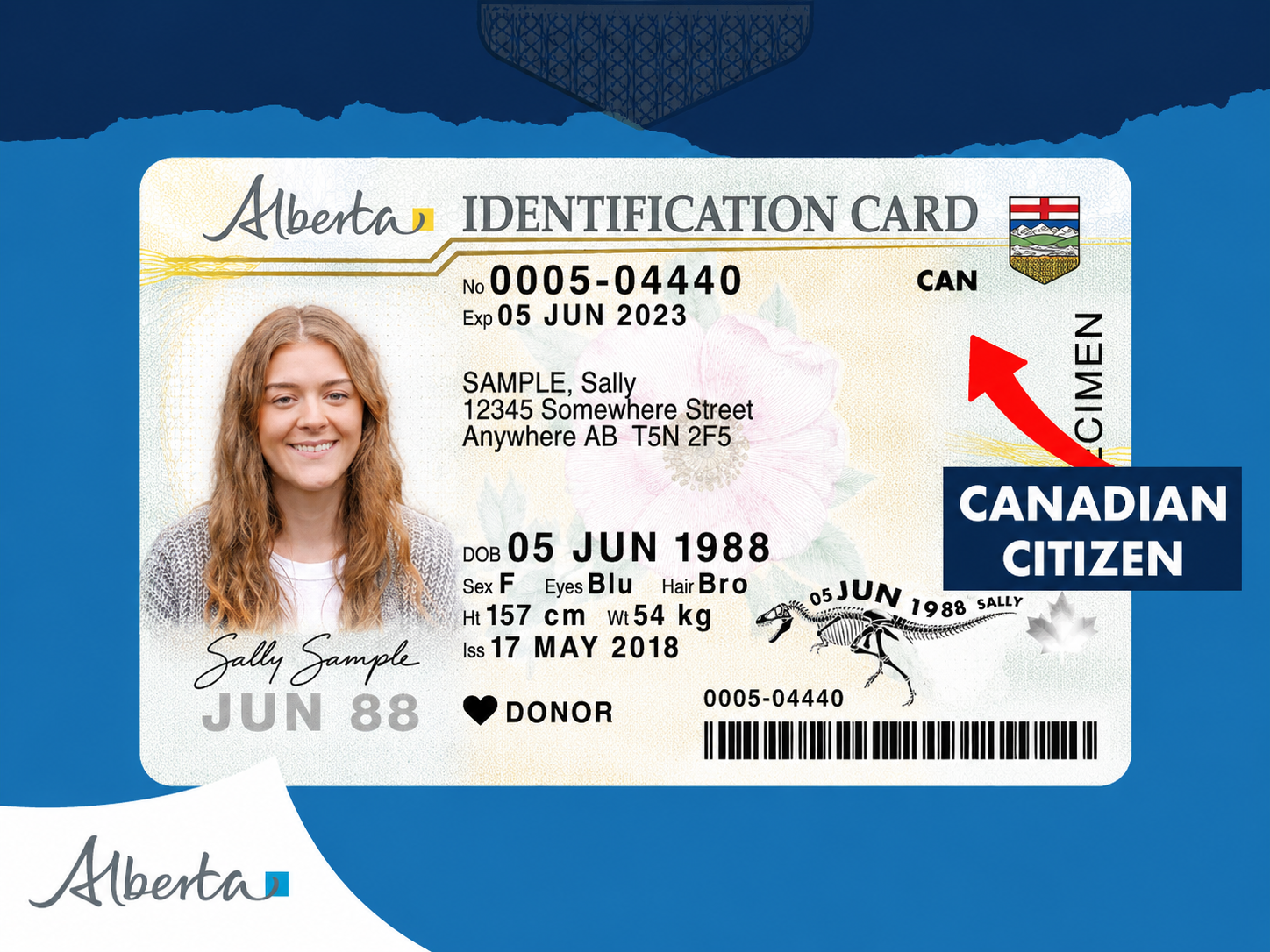
Albertans renewing or replacing their driver's licenses this summer may notice a significant change to the cards they carry every day.
The Alberta government has announced that beginning July 2, driver's licenses and identification cards will include an individual's Alberta Health Care number and citizenship status, consolidating information that previously appeared on separate documents.
The move is part of a broader government effort to streamline services and reduce administrative paperwork.
In announcing the change, Minister of Service Alberta and Red Tape Reduction Dale Nally said the goal is to simplify access to government services.
"This is about making everyday life simpler and making government services easier to access when you need them," Nally said in a social media statement announcing the initiative.
For many Albertans, the change means the familiar paper Alberta Health Care card, which has been issued for decades, will no longer be required for identification purposes.
Alberta is not the first province to combine information onto a single government-issued card. British Columbia has offered a combined driver's license and health card for several years, allowing residents to carry fewer government documents.
However, Alberta's decision has generated debate among privacy advocates, opposition politicians, and some public policy experts.
One concern centres on the inclusion of Alberta Health Care numbers on documents that are routinely shown to businesses, employers, hotels, financial institutions, and other organizations for identification purposes.
In December 2025, Alberta Information and Privacy Commissioner Diane McLeod raised concerns about the proposal in a letter to the provincial government.
McLeod warned that personal health numbers are considered valuable targets for fraud because they can potentially be used to access health-related services or personal information.
She also expressed concern that organizations involved in issuing driver's licences are not subject to the same privacy oversight and protections that apply to health-care providers and government health agencies.
The Alberta government has not publicly indicated that it intends to alter the rollout schedule in response to those concerns.
The addition of citizenship information has also drawn attention.
The government has not specifically linked the change to Alberta's upcoming citizen initiative and referendum discussions. However, the announcement comes as the province prepares for several referendum questions expected to be presented to Albertans later this year, some of which relate to eligibility for government services and residency requirements.
The Official Opposition NDP has criticized the citizenship designation, arguing that it is unnecessary and could create additional privacy concerns.
Supporters of the change, meanwhile, argue that combining information onto a single card may improve efficiency, reduce paperwork, and make interactions with government services more convenient.
For residents of Chestermere and across Alberta, the practical impact will become apparent beginning July 2, when newly issued licences and identification cards begin reflecting the new format.
As the rollout proceeds, questions surrounding convenience, privacy, and security are likely to remain part of the public conversation.