

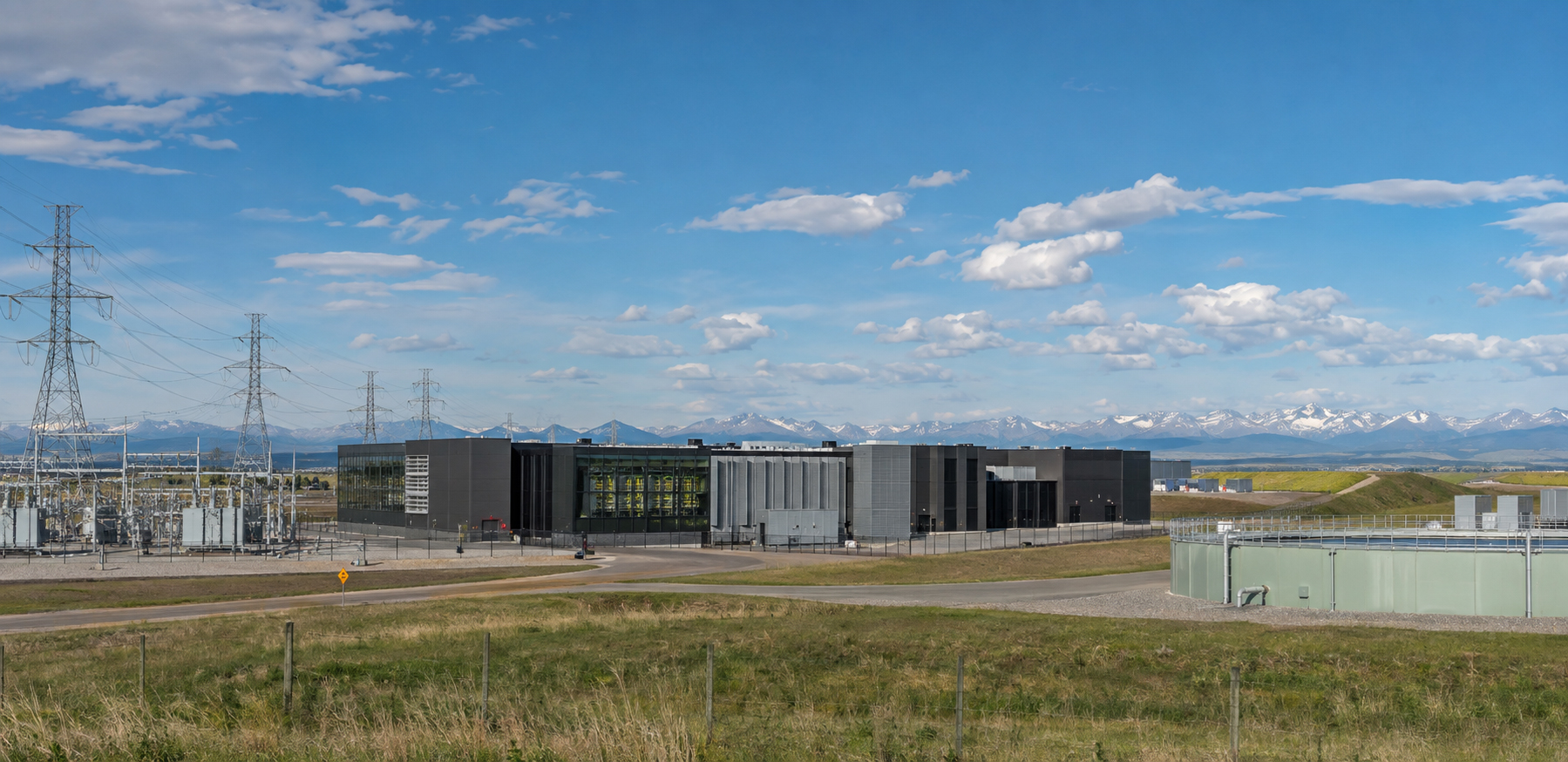
Albertans will have several opportunities over the coming month to ask questions about the province’s push to attract large-scale artificial intelligence data centres.
The provincial government has opened an online information hub and scheduled three in-person town halls, along with a provincewide virtual session. The meetings follow an Aug. 6 announcement outlining how Alberta says it will manage the economic and infrastructure demands associated with the developing industry.
The virtual town hall is scheduled for Aug. 27 from 6 to 7 p.m. Premier Danielle Smith and Technology and Innovation Minister Nate Glubish are listed as hosts. Registration must be completed by noon on Aug. 25 through the province’s AI data centre engagement page.
In-person meetings are scheduled for Ponoka on Aug. 19, Sturgeon County on Aug. 20 and Grande Prairie on Sept. 11. No meeting is scheduled for Chestermere, making the online session the most direct option for local residents wishing to participate.
The province says its approach is built around four commitments: taxpayers will not carry the financial risk, electricity-grid reliability will take priority, water use will be regulated and Albertans will receive financial benefits through taxes, royalties and a levy on data-centre equipment.
Those commitments are government policy statements rather than guarantees that every proposed project will proceed or deliver its estimated benefits. Data centres must still complete municipal planning, regulatory and electricity-connection processes.
Alberta’s data-centre levy took effect Jan. 1. It applies a charge of up to two per cent to the value of computing equipment at large-scale facilities. Lower rates are available to operators that reduce their effect on the provincial grid by supplying their own power.
The levy is also fully deductible from Alberta corporate income tax. That means the amount collected through the levy may reduce the provincial corporate income tax otherwise payable by an operator. Data centres may also generate municipal property taxes and natural-gas royalties, depending on how individual projects are developed.
Electricity demand remains one of the central questions surrounding the industry. The Alberta Electric System Operator established an interim 1,200-megawatt limit for large-load connections in 2025 after concluding that connecting every project then seeking access could impair grid reliability.
The AESO has since published technical requirements for transmission-connected data centres. These facilities can create unusual operating demands because their electricity use may change quickly and their equipment can be sensitive to voltage and frequency fluctuations.
Water use is another issue likely to receive attention during the town halls. The province says data-centre proposals remain subject to Alberta’s Water Act and the existing system for water licences and allocations. Actual use will depend on each facility’s design, cooling system and location.
The government estimates that its strategy has attracted between $100 billion and $200 billion in potential private investment. It has not published a project-by-project list supporting the full range, and potential investment should not be treated as money already committed or construction already approved.
One confirmed development is Meta’s planned data-centre campus in Sturgeon County. The province lists the facility investment at more than $13 billion, excluding its computing chips and associated power plant. Government and company announcements say the project could employ more than 3,000 construction workers at its peak and approximately 300 people once operating.
For Chestermere residents, the debate is not simply about technology projects located elsewhere. Decisions about large additions to Alberta’s electricity system, provincial revenue and water allocation can have wider implications for communities across the province.
The town halls provide residents with an opportunity to test the government’s claims, ask how safeguards will be enforced and seek clearer information about costs and benefits. Registration and background material are available through Alberta’s AI Data Centres information hub.