


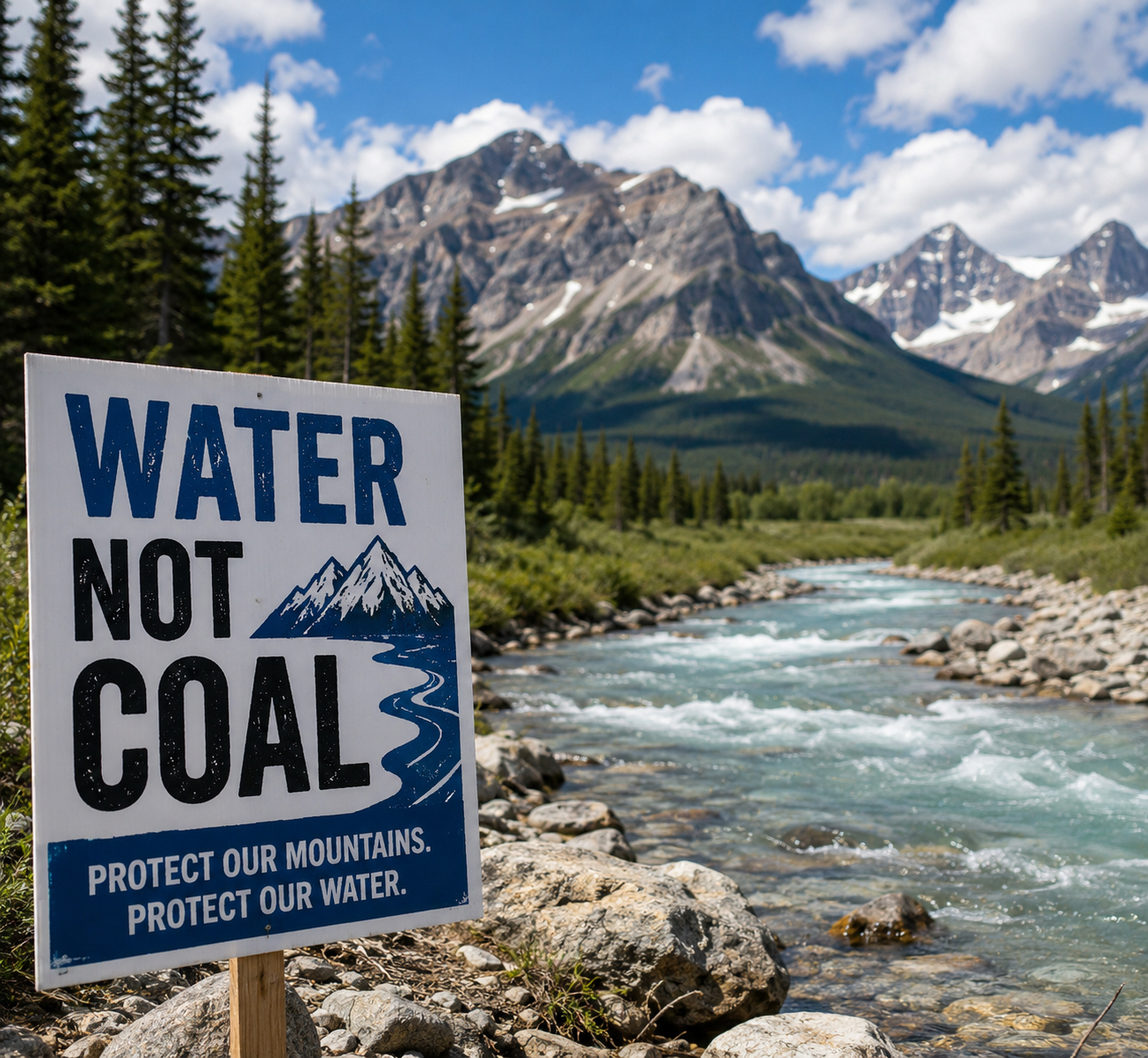
A citizen-led petition calling for new limits on coal mining in Alberta’s Rocky Mountains has moved into the verification stage after campaign organizers submitted signed petition sheets to Elections Alberta.
The Water Not Coal citizen initiative, led publicly by Alberta country musician Corb Lund, is seeking provincial legislation to prohibit new coal mining and exploration along the Eastern Slopes of the Rocky Mountains. The campaign argues that new coal development could put drinking water sources, headwaters and downstream communities at risk.
Elections Alberta issued the petition in February under Alberta’s citizen initiative process. In order to move forward, the campaign was required to collect signatures from eligible Alberta voters before submitting the signed sheets for official review.
The petition was delivered to Elections Alberta in Edmonton on June 10. Elections Alberta is now responsible for verifying whether the campaign has met the requirements set out under provincial law, including whether enough valid signatures were collected.
The campaign has focused much of its concern on proposed coal development in the Crowsnest Pass area, including the Grassy Mountain project. Supporters of that project have argued it could bring jobs and economic activity to the region, while opponents have raised concerns about water quality, selenium contamination, landscape impacts and the long-term risks of industrial activity near sensitive headwaters.
For Lund, the issue has been framed around the protection of water rather than politics. He has said Albertans from across the province showed interest in the petition because the Eastern Slopes feed major river systems relied on by communities, farms, ranches and businesses well beyond the mountain region.
That is what gives the debate a broader provincial reach. A decision made about coal development in the mountains can become a water issue for people far downstream. For many Albertans, the question is not only whether one project should proceed, but how the province should balance resource development, local employment, environmental protection and long-term watershed security.
Premier Danielle Smith has said the petition appears to be a legislative proposal, meaning it would move through a process connected to the legislature rather than automatically becoming a referendum question.
The next step now rests with Elections Alberta. If the required number of valid signatures is confirmed, the province would then have to consider the proposal under Alberta’s citizen initiative legislation.
The coal debate is centred in southern Alberta’s mountain region, but the water question reaches much farther. For communities across the province, including Chestermere, the issue is less about one mine than about how Alberta manages the sources of the water that sustain communities, agriculture, recreation and future growth.
As the petition moves through verification, Albertans on both sides of the debate will be watching to see whether the Water Not Coal campaign has cleared the threshold needed to push the issue further into the provincial decision-making process.